


Search here
Can't find what you are looking for?
Feel free to get in touch with us for more information about our products and services.
 Use Cases
The Hidden Number: How Grepsr Cracked Real-Time Stock Data for a Major Retail Network
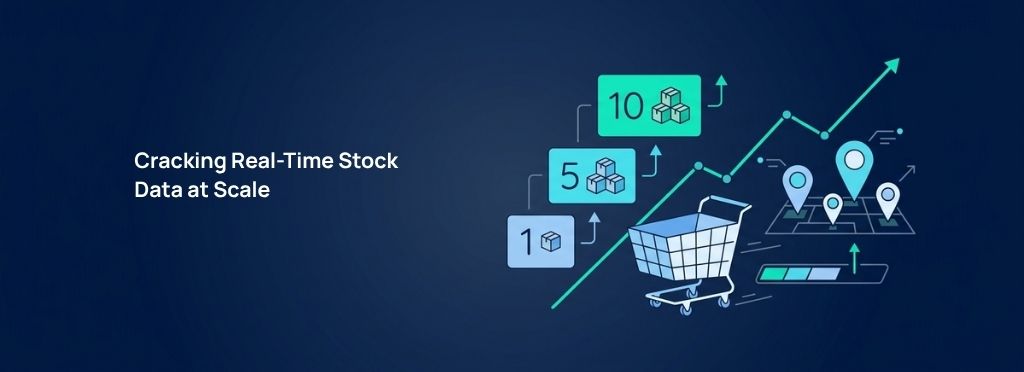
Some websites don’t hide their data behind a locked door; they hide it behind a maze.
A major retailer’s stock levels were never listed anywhere on its site; the only way to find the real number was to keep adding items to a cart until it broke.
This is how Grepsr turned that breaking point into a daily, store-by-store intelligence feed for a global consulting firm – at a scale no manual process could match.
About the Client
Our client is a leading global management consulting firm, engaged to advise on inventory and pricing strategy for a major national hardware & home improvement retailer.
The retailer operates a large network of physical stores spanning multiple states, and understanding real-time stock behavior across that network was central to the engagement.
Their Requirements
The client needed daily, store-level visibility into two things:
Exact stock quantities and pricing, across a defined list of products and a network of 200+ active stores.
The purpose was straightforward: monitor stock depletion, identify movement trends, and track local pricing disparities between locations.
What wasn’t straightforward was getting the data at all.
The Challenges
1. No visible stock data. The retailer’s website doesn’t expose real stock numbers anywhere in its public user-facing pages; the product pages show vague messaging like “in stock” or “usually ships in 5-9 days,” with no public API returning exact quantities.
2. The only real number is behavioral. The one way to find true stock is to test it directly: add the product to the cart, increase the quantity, and find the exact point where the site stops accepting the order. That breakpoint, which is not displayed on the product details page, is the real figure.
3. Manual workarounds don’t scale. The client’s own team had already discovered this and was working around it with the help of ChatGPT by doing batch runs in: loading a page, selecting stores from multiple addresses, and adding a product to the cart.
Then testing a quantity, catching the quantity and messaging the quantity selection shows, catching any other site messages, clearing the cart, and repeating. It worked as a proof of concept, but doing it by hand across dozens of products and hundreds of stores, every day, wasn’t sustainable.
4. Naive automation breaks the site instead. A straightforward automated version of the same process didn’t solve the underlying problem either.
The retailer’s cart accepts inputs up to 10,000 units, so testing quantities sequentially – 1, 2, 3, and up could require up to 10,000 requests per product just to find where it breaks. At the required scope, that volume of sequential requests would trigger server bans long before any data was delivered.
Solutions Conjured by Grepsr
Grepsr’s engineering team rebuilt the approach from the ground up around three core optimizations:
1. Binary search instead of brute force.
Rather than counting up one unit at a time, the crawler tests the midpoint of the possible range and halves the search space based on whether that quantity succeeds or fails.
The same logic behind any efficient search algorithm was applied to live cart behavior. A product that could theoretically require 10,000 sequential checks is now resolved in roughly 15 to 17 requests: a 99.8% reduction in server load per product, and the change that made daily automation possible at all.
2. Direct store-ID mapping.
Instead of navigating the site’s UI store-by-store to select a location, the team pulled the retailer’s backend store directory in a single API call, matched it against the target addresses, and injected store IDs directly into each request, eliminating slow, failure-prone UI navigation entirely.
3. Multiprocessing at scale.
With per-product requests optimized, the remaining bottleneck was volume: well over 200,000 requests needed each day across the full store and product matrix.
Running that sequentially would have taken 200+ hours, which is unusable for a daily deliverable. A multiprocess architecture parallelized the crawl, bringing runtime down to roughly 7 hours, scheduled overnight so fresh data lands before the start of business hours.
Eventually, we delivered the result for every product, at every store, every day was an exact maximum available quantity, the site’s displayed stock status, any bulk-purchase increment rules, and error/remarks logging for full transparency on data quality.
Final Impact
The system ran daily for two consecutive weeks without missing a delivery window, adapting along the way, reactivating stores that temporarily dropped from the active list, and adjusting scope as store counts shifted.
| Metric | Result |
|---|---|
| Daily requests | 150,000+ |
| Clean data rows delivered per day | ~19,000 |
| Daily runtime | ~7 hours |
| Delivery window | Before the start of business hours, daily |
“Regarding future work, we will be back because the work you have done was very good.”
– Engagement Manager, Client’s Consulting Team
Beyond the numbers, the engagement demonstrated something the client’s own team had already brushed up against: AI-assisted manual workflows are genuinely useful for figuring out a problem once, but they scale with the person running them, not with the problem itself.
A managed service doesn’t make that manual process faster; it replaces it entirely with an engineering team that runs crawlers at a volume and consistency no manual workflow can sustain.
But automation alone isn’t the full story.
Every other dataset passed through automated and customized QA rules/logics along with human monitoring before every other day’s delivery. Thus, catching edge cases like a product listing that 404s or a store that temporarily drops offline that a purely AI-automated pipeline would either miss or silently misreport.
And the client never had to manage any of it directly: a dedicated Customer Success Manager owned the engagement end-to-end. This includes monitoring runs, delivering in the client’s data pipeline, flagging anomalies, and resolving issues before they ever became the client’s problem to notice, let alone solve.
The binary-search framework built for this project is now a reusable template for any high-cart-limit e-commerce site where stock data isn’t otherwise accessible.
This way, we are turning a one-off engagement into a standing capability for future retail and consulting clients.
Stop guessing what’s on the shelf.
If your data is stuck behind a login, a cart, or a broken API, chances are we’ve run into it before. Let’s figure out your data challenge and solve it together.

Shaping a prosperous future with data-driven decisions
Before It Trends: Social Listening at Scale for a Global FMCG Brand
Most brands don’t know what to monitor when they come to you. There’s no keyword list waiting to be handed over, no tidy set of hashtags someone already tracks. That decision hasn’t been made yet, and it turns out to be most of the work. Meanwhile, the thing worth tracking is already moving. New words […]
From Product Catalogue to AI Citation: AI Prompt Monitoring for Brand Visibility at Scale
Each passing day, we users skip traditional search engines like Google and Bing for our queries. We directly ask an AI instead, like ChatGPT, Perplexity, or Gemini, and act on whatever answer comes back, often without checking a second source. Even when making a purchase decision, buyers rely on AI. The response is assembled from […]
Beyond the Death: Turning Obituary Data Into Fraud Detection Signals
Every year, pension funds and insurers pay out benefits to people who are no longer alive to receive them. The infrastructure meant to catch a death hasn’t caught up yet, so checks keep getting cut and policies stay active while the record goes unverified. The Social Security Death Master File (DMF) is the default source […]

Competitor Location Monitoring at Scale: Tracking Dealer Network Change Over Time
Markets shift constantly, and most of that shifting happens quietly. A competitor expands into a new region, pulls back from another, and neither move comes with an announcement. For a manufacturer trying to track where rivals are gaining ground, the only real signal is where their dealers show up next. But here’s the thing: a […]
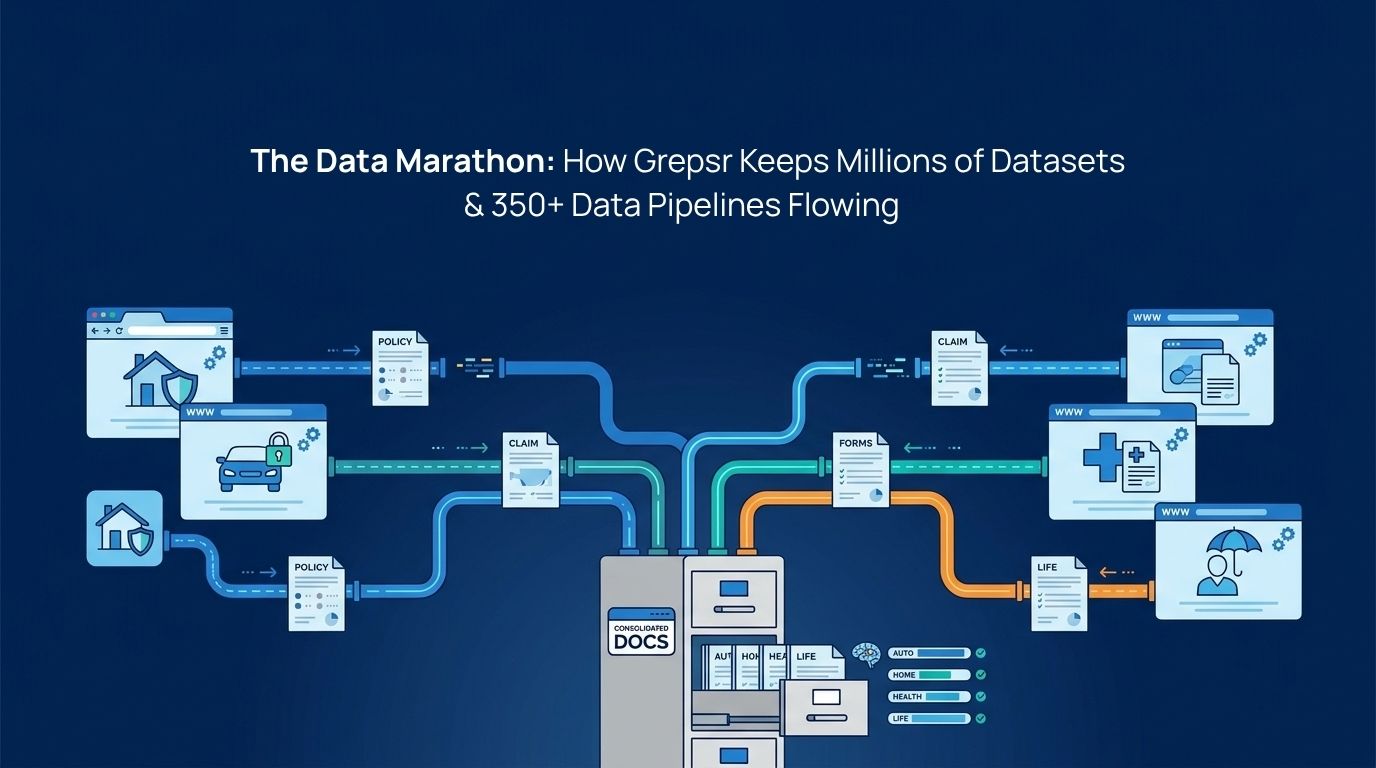
The Data Marathon: How Grepsr Keeps Millions of Health Insurance Records and 350+ Data Pipelines Flowing
A partnership story from the health insurance data industry When a New York-based health insurance data and API platform set out to build a standardised data layer for the employee benefits industry, the product vision was straightforward: Give brokers, benefits administrators, and health insurance carriers a single, standardised data layer including provider networks, plan details, […]

Web Scraping for Competitive Market Insights: Powering $3 Billion in EBITDA Through Data-Driven Pricing
Setting prices for products is similar to adjusting the sails on a boat. If you don’t read the wind properly, you’ll either be stuck in place or heading in the wrong direction. Data is the wind that helps you steer a steady course. In an economy where every dollar counts, businesses can’t afford to guess […]
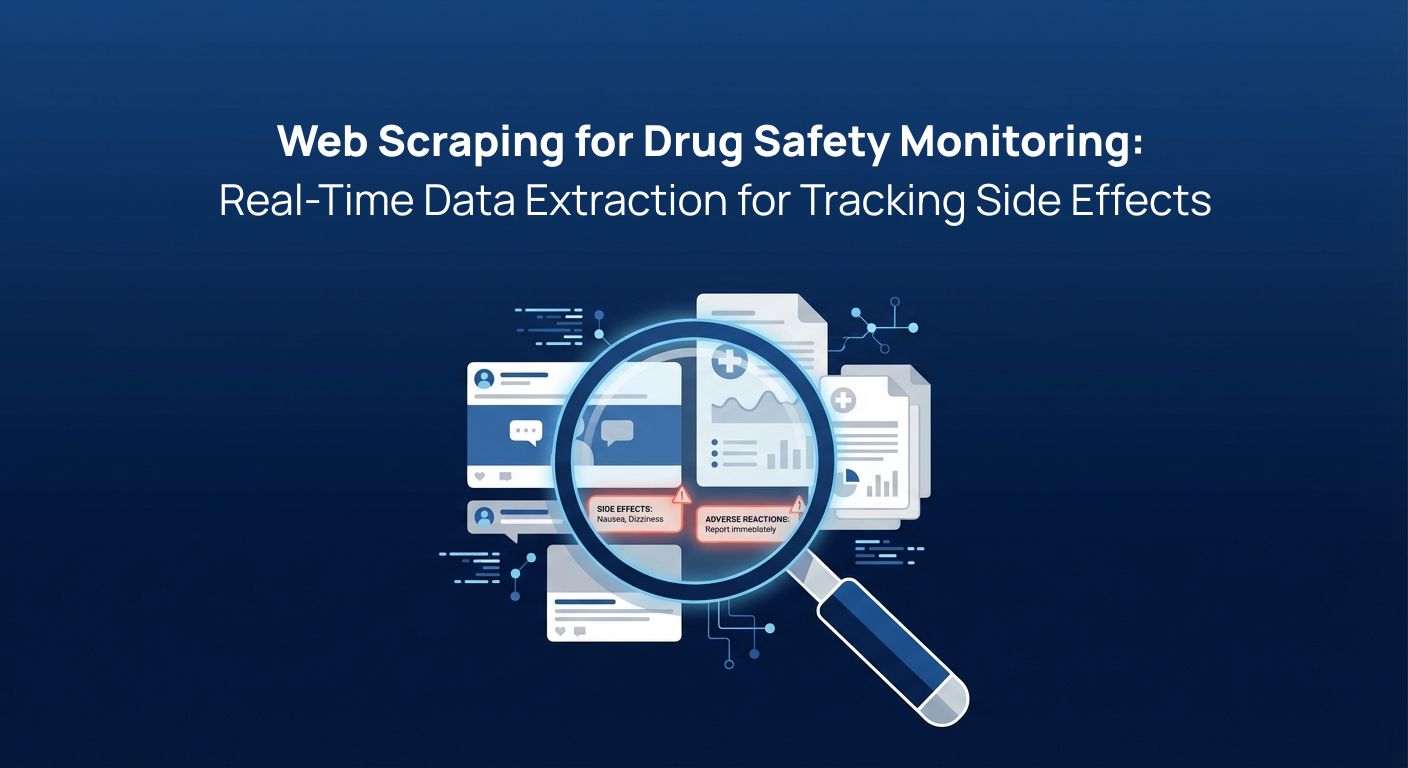
Web Scraping for Drug Safety Monitoring: Real-Time Data Extraction for Tracking Side Effects
Quick Summary: Web scraping and public web data extraction can help pharmaceutical companies detect drug side effects faster by monitoring publicly available discussions and medical publications. This case study explains how a pharma company used web scraping to collect real-time signals about adverse drug reactions and turn scattered public information into structured safety data. Imagine […]

Analyzing Celebrity Impact on Consumer Behavior through Social Media Data: Taylor’s Version
This case study takes a deep dive into the powerful influence of global pop star –Taylor Swift. By extracting social media data using carefully selected keywords and hashtags, we analyze patterns and trends that reflect the powerful gravitational pull of her influence on consumers. Continue reading for jaw-dropping insights. The Power of Celebrity Influence Celebrities […]

Boosting Efficiency and Accuracy: The Power of AI Data Validation for E-commerce Growth
In e-commerce, one wrong product detail can cost you a sale, or worse, a customer’s trust. As businesses scale, ensuring the accuracy and consistency of their data becomes an increasingly complex challenge. Similarly, for a growing electronics retailer, managing an expanding catalog of products with manual data validation was a recipe for errors, delays, and […]
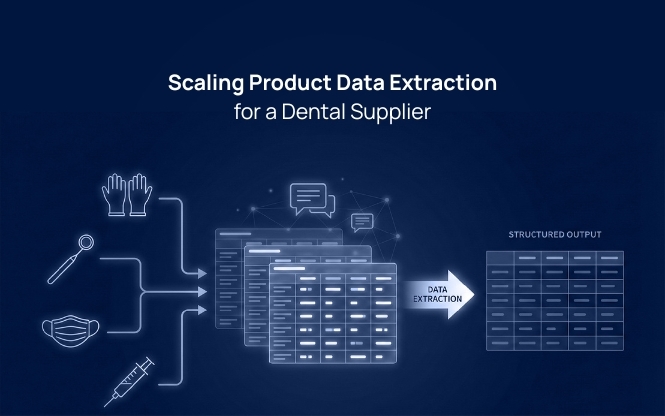
How Proactive Communication Scaled a Product Data Extraction Project for a Dental Supplier
The dental products retail industry is thriving in the online business sector. As more dental professionals turn to digital platforms for sourcing products, those who can harness the power of big data are gaining a competitive edge. One of the most effective ways to leverage this data is through product data extraction—the process of automatically […]

How a Leading Consumer Electronics Company Leveraged Automated Customer Review Extraction
Customer reviews serve as the backbone of product development and consumer insights. For one leading consumer electronics brand, these reviews were essential for fueling machine learning models that perform sentiment analysis and inform key business decisions. However, the frequent removal of reviews by platforms due to policy violations creates significant challenges, leaving gaps in the […]

Powering a Booking Intelligence System with Real-Time Hotel Data Extraction
In the travel industry, booking data is the pulse that reveals how markets move. It captures the patterns of demand, competition, and consumer intent like who’s booking, where, when, and at what price. This information fuels dynamic pricing, helps forecast occupancy, and enables travel platforms and hotels to anticipate market shifts rather than react to […]

How ESG Advisory Firms Can Leverage Automated Article Extraction for Smarter Insights
Government websites and official press releases are goldmines for ESG (Environmental, Social, Governance) intelligence. Every update – whether it’s a new regulation, policy amendment, or court directive can shape how ESG advisory firms advise their clients. Yet, these updates are scattered across hundreds of government portals, each with its own format, language, and publishing schedule. […]

Seamless Vehicle Data Extraction for a Leading Automotive Intelligence Provider
In the automotive industry, having access to comprehensive, real-time vehicle information is essential for making informed decisions. However, gathering this data from online sources comes with many challenges, such as security barriers, IP restrictions, and complex firewall configurations. These can significantly disrupt the flow of critical data needed to support key business operations. In this […]

High-Coverage POI Data Extraction For Powering FMCG Market Strategy
Finding the right retail locations is a lot like navigating a city without street signs – you might eventually reach your destination, but not without wasted time, missed turns, and lost opportunities. Points of Interest (POI) data acts as those street signs, offering clear visibility into where consumers shop, dine, and gather. For global brands […]
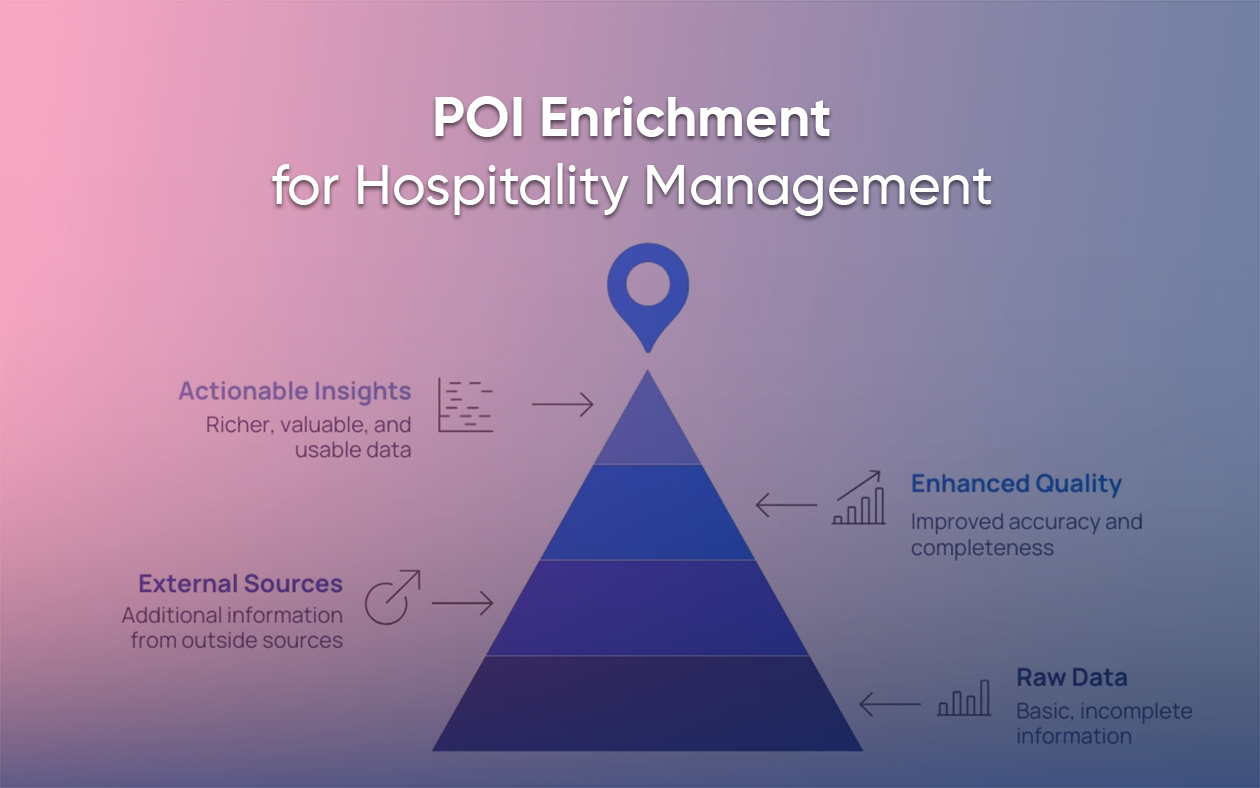
POI Data Enrichment for a Leading Hospitality Management Company
Data is valuable, but enriched data is priceless. Data enrichment is the process of adding value and further information to an existing dataset to improve its quality, accuracy, and completeness. It involves taking raw, incomplete data and enhancing it with additional and meaningful information from external sources. It turns a basic dataset into something richer, […]

Top Six E-commerce Datasets: Web Scraping Use Cases
The irreversible rise of e-commerce has been a similar phenomenon around the world. In 1998, the entirety of the e-commerce market stood at just $5 billion.
Location Intelligence in Retail: Real Use Cases From Grocery Stores
Do you know what separates successful retailers from the ones that are closing down? One key factor is using location intelligence in retail to make informed decisions. Modern retailers scrape the internet to find out competitor store hours, demographic shifts, and foot traffic patterns to find impactful location strategies. And the numbers back it up. […]

Shaping Organizational Culture with Glassdoor Data
Glassdoor Data offers a detailed look into organizational culture by analyzing employee reviews and ratings. This data provides insights into company dynamics, regional trends, and the impact of major events, helping businesses improve employee satisfaction and cultural alignment. Netflix’s culture deck, crafted by Reed Hastings, champions employee autonomy and creativity, even offering unlimited vacations as […]

How Web Scraping Saved a Vehicle Data Platform
How Grepsr rescued a vehicle data platform from a major OEM block—restoring 100% uptime, 99.9% data accuracy, and real-time API performance for VIN checks and insurance quotes.
Mapping LA Wildfire Impact with POI Data
POI data extraction and reverse geocoding transformed wildfire impact maps into precise addresses, enabling targeted disaster relief.
How a Real Estate Agency Gained Competitive Intelligence with Real-Time High-Quality Datasets
Gathering structured real estate data from various government sites and public records at scale poses significant challenges.

What Is Shipping Data & Why It’s Critical for Logistics Performance
Before the pandemic, the global supply chain relied on predictable inventory flows. There was high schedule reliability, which meant the carriers usually followed the same schedules. This ensured the arrival of inventory in time, replenishment of stores, and constant operation of the factories.

Unraveling Job Market Dynamics: Leveraging Data Analytics for Competitive Edge
The notion of hiring the “right” candidate needs clarification of what’s “right” for your organization. Starting from the alignment of values, motivation, ambition, and technical skills required for the position.

Enabling Market Expansion: Data Refinement at Grepsr
Any data is only as good as the insights derived from it. However, before we begin the analysis, the data must be put through adequate pre-processing techniques that standardize, aggregate, and categorize the dataset.

Introduction to Web Scraping & RPA
Web scraping automatically extracts structured data like prices, product details, or social media metrics from websites. Robotic Process Automation (RPA) focuses on automating routine and repetitive tasks like data entry, report generation, or file management.

Car Rental Data Unwrapped: Merry Miles and the Christmas Story in the UK
Delve into the festive drive as we analyze 50K+ car rental records from ‘Sixt – Rent a Car’ during December 2023. From the holiday surges on Christmas Eve to discovering budget-friendly gems like the Kia Picanto, come with us as we decode the Merry Miles of Christmas car rentals in the UK.

NYC POI Data Dynamics: Decoding Impermanence
Geographical locations or POIs are not entities that last for posterity. We collected NYC POI data to decode the various dynamics that may help executives make informed decisions within the backdrop of impermanence.

Revving Up for E-commerce Success in Q4: Leverage Web Scraping
Inflationary pressures, rising prices, and the looming possibility of an impending recession have dealt an unwarranted blow to e-commerce sales over the last three quarters.

Harnessing POI Insights: The Web Scraping Advantage
Points of Interest (POIs) are more than just points on a map. They are filled to the brim with actionable data like addresses, names, contact details, and working hours. POI data also includes images, which add a visual component to the data. With web scraping, you can get the advantage you need to harness POI insights.

Analyzing US Job Postings Data to Understand Job Market & Economy
The US economy was forecast to spiral into a recession in 2023. Yet, despite fears, if current job listings and hiring trends are to be believed, the current economic reality appears to be quite different. The robust nature of the current US job market is proving to be one of the main drivers of the country’s strong economy.
